
Oct 19, 2026OEM & ODM
OEM Smart Pet Feeders: Private Label & Customization Guide
Explore OEM smart pet feeders and private label customization, including branding, packaging, MOQ, samples, compliance and wholesale sourcing considerations.
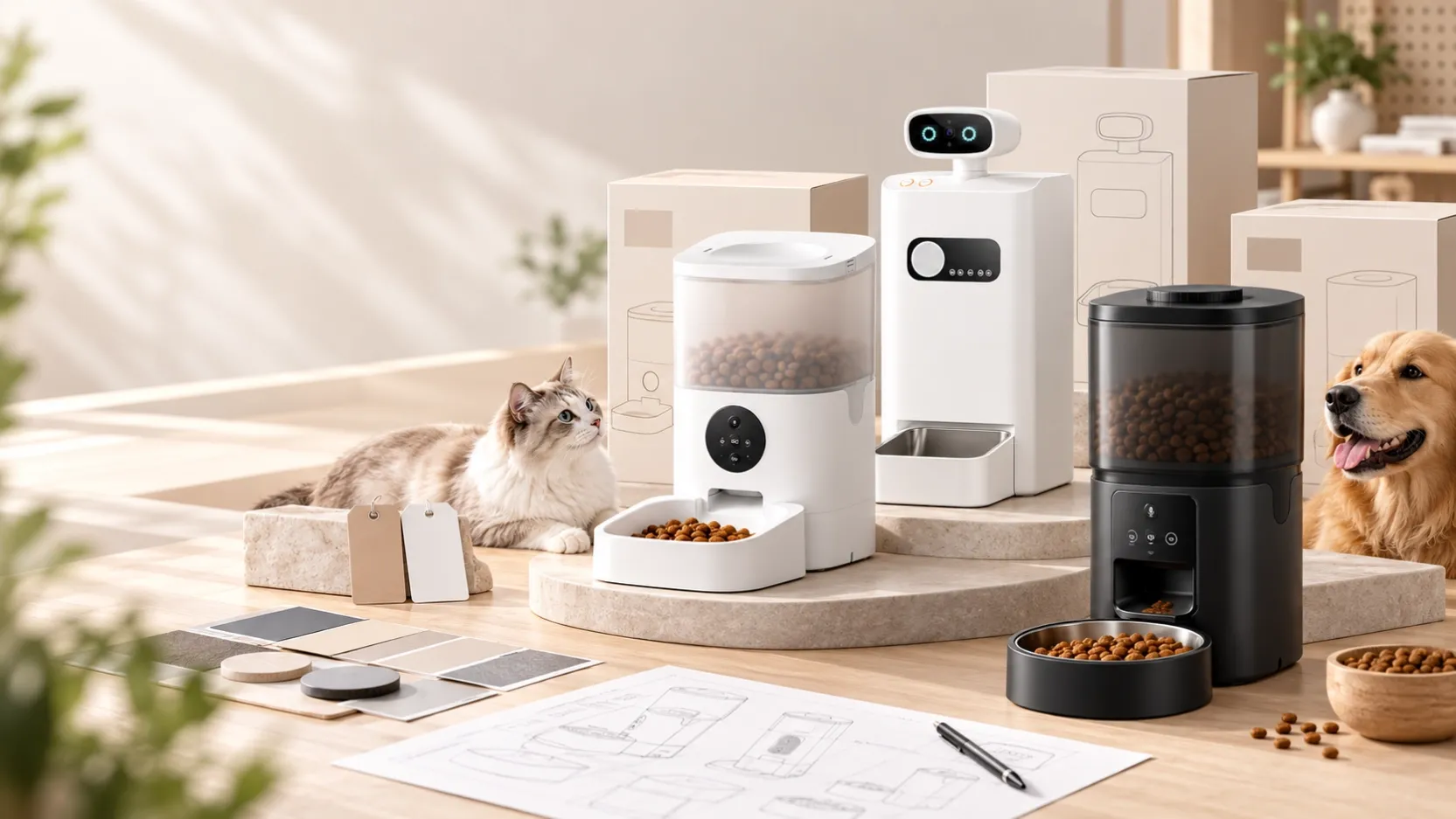
OEM Smart Pet Feeders: Private Label & Customization Guide
Building a competitive pet product brand requires more than choosing an attractive automatic feeder. For international importers, distributors and private label brands, product differentiation, consistent quality and long-term supply planning are equally important.
OEM and ODM cooperation can help businesses develop smart pet feeding product ranges that better match their branding and target market requirements.
This guide explains how to evaluate customization options, prepare a product brief and manage the sourcing process.
1. What Is an OEM Smart Pet Feeder?
OEM stands for Original Equipment Manufacturer, while ODM stands for Original Design Manufacturer.
In the pet feeder industry, these terms are often associated with different levels of product customization and development.
An OEM project may involve producing a pet feeder according to agreed customer specifications. An ODM project may involve selecting an existing product design and adapting supported features, branding or packaging for a customer.
The exact scope depends on the supplier's capabilities, design ownership and commercial agreement.
Private label projects typically focus on presenting an existing product under the buyer's brand.
2. Which Smart Pet Feeder Products Can Be Considered?
Common automatic feeding product categories include:
WiFi Smart Pet Feeders
Connected feeders are suitable for brands targeting customers who value app-based feeding management and convenience.
Buyers should verify connectivity requirements, supported software and the responsibilities for technical support.
Automatic Pet Feeders with Camera
Camera-equipped feeders can help differentiate a premium smart pet care range.
Consider camera performance, app features, wireless compliance and after-sales complexity when evaluating these products.
Dual Bowl Automatic Pet Feeders
Dual bowl models offer a recognizable product difference for multi-cat households.
Buyers should evaluate bowl materials, dispensing design and cleaning convenience.
Programmable Automatic Pet Feeders
Models with scheduled feeding functions can appeal to customers seeking everyday feeding convenience without necessarily requiring camera functionality.
These products may offer a useful entry point for a broader automatic feeder collection.
3. Common Private Label Customization Options
Customization availability varies by model. Buyers should evaluate the following opportunities with their supplier.
Custom Logo and Branding
Brand identification may be applied through printing, labeling or other approved manufacturing processes.
Confirm logo dimensions, artwork format, durability and sample approval requirements.
Customized Retail Packaging
Packaging can influence brand presentation, shipping efficiency and the customer unboxing experience.
Discuss carton structure, printed artwork, protective materials, language requirements and barcode placement.
Multilingual User Manuals
Importers supplying multiple markets may require product instructions in different languages.
Manuals should accurately reflect the specific device, application and safety requirements.
Product Color and Configuration
Some products may support color changes or selected configuration options. Others may require additional tooling, testing or minimum quantities.
Do not assume that all existing feeder designs are available for unrestricted customization.
4. How to Plan an OEM or ODM Pet Feeder Project
A structured development process can help avoid specification changes and unnecessary costs.
Step 1: Define the target market.
Identify intended countries, customer groups, retail channels and expected positioning.
Step 2: Select a suitable product model.
Compare WiFi feeders, camera feeders, dual bowl models and conventional automatic feeders.
Step 3: Prepare a customization brief.
Include target specifications, brand files, packaging requirements, estimated order quantity and compliance expectations.
Step 4: Review samples.
Evaluate product appearance, feeding performance, connectivity, cleaning convenience and packaging quality.
Step 5: Confirm commercial terms.
Agree on the approved sample, MOQ, price basis, payment terms, production schedule and quality requirements.
Step 6: Plan ongoing supply.
Discuss spare parts, warranty arrangements, app support and future order forecasts.
5. Understanding MOQ and Customization Costs
There is no universal MOQ for OEM smart pet feeders.
Required quantities can depend on the base product, logo application, packaging materials, color requirements, production setup and component purchasing thresholds.
A private label packaging project may require a different MOQ from a new mold or electronic modification.
Ask for itemized quotations rather than relying on a single general customization price.
6. Quality Control and Compliance Considerations
For electronic smart pet products, buyers should consider both physical product quality and connected software performance.
Important checks may include feeding accuracy, component fit, electrical safety, wireless operation, packaging protection and software compatibility.
For destination market compliance, request documentation specific to the selected model.
The availability of CE, FCC or RoHS-related records does not automatically establish compliance for every product configuration or export destination.
Frequently Asked Questions
Can I put my own brand on a smart pet feeder?
Private label branding may be available for selected models. Confirm logo methods, packaging requirements, MOQ and approval procedures with the supplier.
Is OEM the same as private label?
Not necessarily. Private label generally emphasizes selling an existing product under a buyer's brand, while OEM can involve a broader product specification or manufacturing arrangement.
Can I customize the mobile app?
App customization depends on software ownership, development permissions, supported features and commercial arrangements. It should be evaluated separately from physical product branding.
How long does a pet feeder OEM project take?
Lead times vary based on sample availability, customization complexity, material procurement, testing and production scheduling. Request a written project timeline before committing to a launch date.
What documents should I request before placing an order?
Ask for technical specifications, sample confirmation records, applicable compliance documents, packaging details, commercial terms and warranty arrangements.
Discuss Your Smart Pet Feeder Project
YOUNIHAO supports B2B discussions for smart pet feeder sourcing, available customization options and long-term product supply cooperation.
Share your target market, preferred feeder type, branding requirements and expected purchasing quantity so our team can review suitable product options.
Explore OEM/ODM Solutions | Request a Custom Quote